In July 2019 I was interviewed on a podcast by a longstanding friend Nic Gregoriades. “A high-level Freemason, occultist and successful entrepreneur, Robin V has some deep insights into the human experience. In this episode he shares with us the practical applications of mental mastery and spirituality including how we can use them to enhance […]
What started off as a shelf of books in the Surgeon General’s office in 1836 has grown to a collection of millions of print and electronic resources, the U.S. National Library of Medicine has an impressive collection which it generously makes available on its website.
One article worth taking a look at is Plant Signaling and Behaviour, their results suggest that plants are intelligent organisms…
What started off as a shelf of books in the Surgeon General’s office in 1836 has grown to a collection of millions of print and electronic resources, the U.S. National Library of Medicine has an impressive collection which it generously makes available on its website.
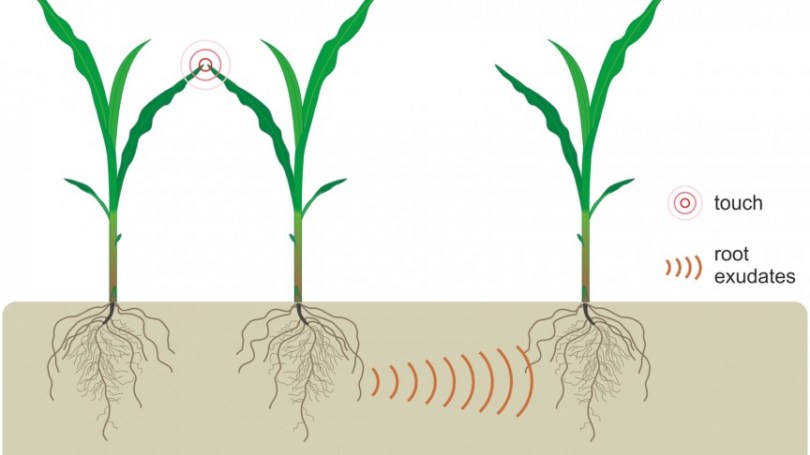
One article worth taking a look at is Plant Signaling and Behaviour, their results suggest that plants are intelligent organisms capable of thought and memory. Here is the Abstract and Summary.
Secret life of plants From memory to intelligence
Abstract
Plants are able to perform photosynthesis and cannot escape from environmental stresses, so they therefore developed sophisticated, highly responsive and dynamic physiology. Others’ and our results indicate that plants solve their optimal light acclimation and immune defenses, photosynthesis and transpiration by a computational algorithm of the cellular automation.
Our recent results however suggest that plants are capable of processing information encrypted in light intensity and in its energy. With the help of nonphotochemical quenching and photoelectrophysiological signaling (PEPS) plants are able to perform biological quantum computation and memorize light training in order to optimize their Darwinian fitness.
Animals have their network of neuron synapses, electrophysiological circuits and memory, but plants have their network of chloroplasts connected by stromules, PEPS circuits transduced by bundle sheath cells and cellular light memory. It is suggested that plants could be intelligent organisms with much higher organism organization levels than it was thought before.
Summary
Plants solve their optimal light acclimation and immune defenses (SAAR), photosynthesis, gas exchange and transpiration with help of a mathematical algorithm (cellular automation) in which input, output and processing of the data are all accomplished using the same hardware. Our experiments identified some parts of this hardware, which includes quantum-redox sensing and changes in PSII (e.g., changes in transthylakoid ΔpH, in NPQ and redox status of the glutathione and plastoquinone pools), PEPS, ROS/hormonal circuits and finally the cellular light memory.
Probably, this is the most elegant system that evolved in complex photosynthetic organisms, since it uses absorbed photons energy in excess by some leaves to improve survival chances of a whole plant. Animals have their network of neuron synapses, electrophysiological and PEPS circuits and memory.
Plants however have their network of chloroplasts connected by stromules, electrophysiological and PEPS circuits transduced by bundle sheath cells and cellular light memory that regulates SAAR. Our results suggest that plants are intelligent organisms capable of performing a sort of thinking process (understood as at the same time and non-stress conditions capable of performing several different scenarios of possible future definitive responses), and capable of memorizing this training. Indeed leaves in the dark are able to not only “see” the light, but also are able to differently remember its spectral composition and use this memorized information to increase their Darwinian fitness.
Monica Gagliano does stuff with plants that no one seems to have done in a very long time, treating them in a manner that acknowledges the possibility of intelligence, consciousness and sentience. The ‘Featured Image’ is one of her paintings.
Her main research is broadly focusing on key aspects of the ecological processes by which organisms are able to gather information on the variable…




 Hermetic Rambling